
Weight loss medications may change not only the risks of surgery, but whether some patients need it at all.
For much of the past decade, innovation in orthopaedic surgery has centered on better implants, robotic assistance, minimally invasive techniques, and biologic treatments. Yet one of the most consequential developments for musculoskeletal care may come from outside the operating room.
Glucagon-like peptide-1 receptor agonists, commonly called GLP-1 medications, have transformed the treatment of obesity. Semaglutide is sold as Ozempic for diabetes and Wegovy for weight management. Tirzepatide, which acts on two related hormone pathways, is sold as Mounjaro and Zepbound.
In major clinical trials, these medications have produced average weight loss approaching 20% of total body weight in some patients. For orthopaedic surgeons, the significance extends well beyond the number on the scale.
Weight is a musculoskeletal issue
Obesity is a major modifiable risk factor for knee osteoarthritis and other painful musculoskeletal conditions. The effect is partly mechanical. In one study of adults with knee osteoarthritis, each pound of weight lost was associated with approximately four fewer pounds of force across the knee during each step.
That reduction accumulates over thousands of steps each day. A patient who loses 40 pounds is not simply carrying 40 fewer pounds. The repetitive load across the knee may be reduced by much more during normal walking.
This raises a larger question: If a patient with knee arthritis loses 40 or 50 pounds, could the improvement be great enough to delay joint replacement?
We now have evidence that this can happen, at least for some patients.
A 2024 randomized trial studied semaglutide in people with obesity and moderate to severe knee osteoarthritis pain. Patients receiving semaglutide lost more weight and experienced greater improvements in knee pain and physical function than those receiving placebo.
This does not mean that semaglutide restores lost cartilage or cures advanced arthritis. It means that changing the load placed on an arthritic joint can meaningfully change how that joint feels and functions.
Avoiding surgery is not the only potential benefit
Some patients may improve enough to postpone surgery. Others will still need an operation but may arrive in better overall health.
Obesity, particularly severe obesity, has been associated with higher rates of wound problems, infection, and revision following total knee replacement. Weight reduction may therefore serve two different purposes. It may reduce symptoms enough to delay surgery, or it may help prepare a patient to undergo surgery more safely.
That distinction matters. Weight loss should not be viewed only as a requirement imposed before an operation. It can be a legitimate part of treating the musculoskeletal condition itself.
The implications may also extend beyond joint replacement. Reduced body weight could lessen mechanical strain associated with some forms of back pain, plantar heel pain, tendon overload, and other weight-bearing conditions. These possibilities are reasonable, but the strongest direct clinical evidence so far concerns obesity and knee osteoarthritis.
Weight loss can come with muscle loss
The story is not simply “lose weight and avoid surgery.”
Substantial weight loss usually includes some loss of lean body mass, which includes muscle. In a body-composition substudy of patients receiving tirzepatide, approximately 75% of the weight lost was fat mass and 25% was lean mass.
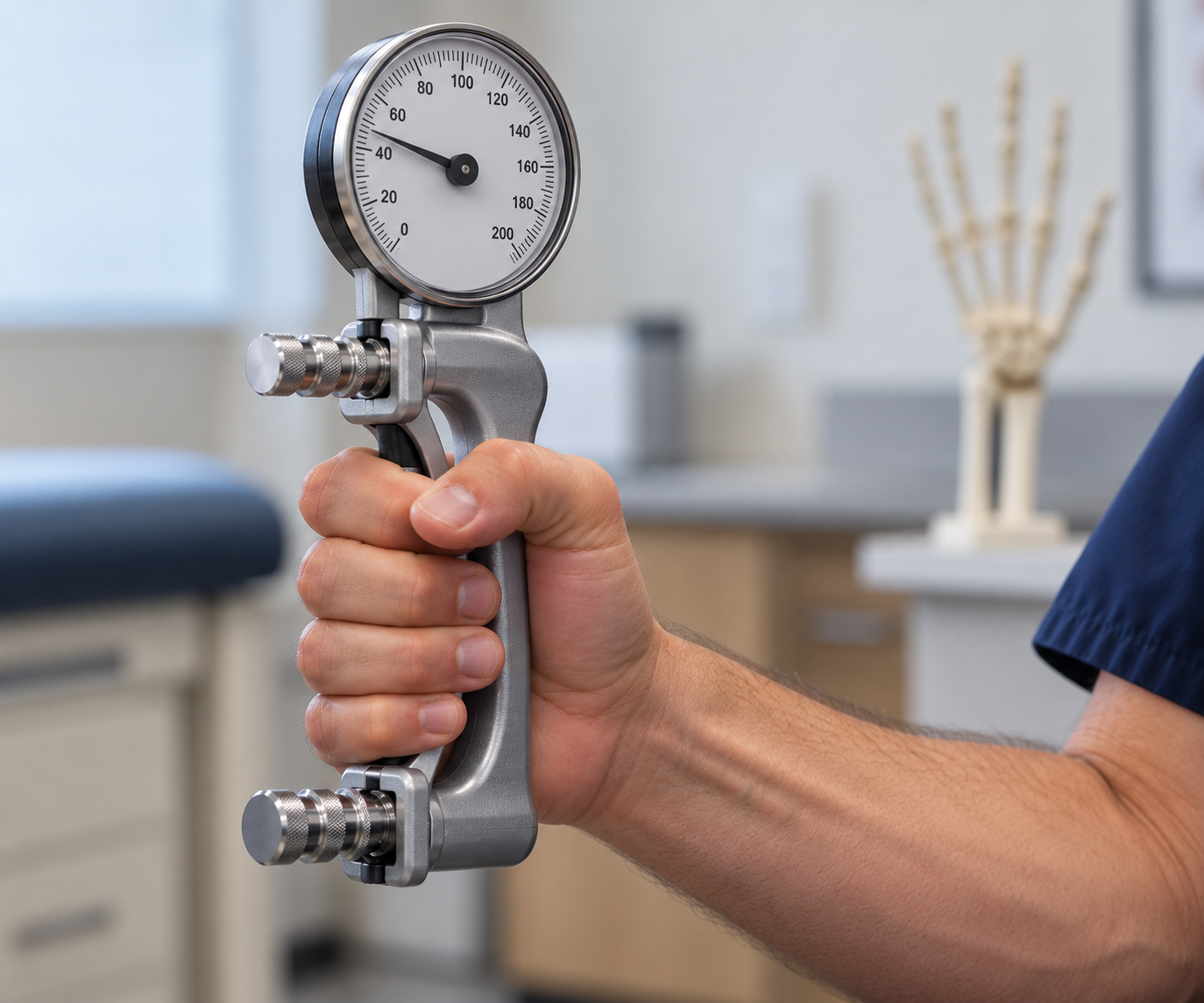
For orthopaedic patients, muscle strength matters. Quadriceps strength affects walking, balance, joint stability, and recovery after knee replacement. A patient who loses substantial weight but also becomes weaker may not receive the full functional benefit expected from the lower body weight.
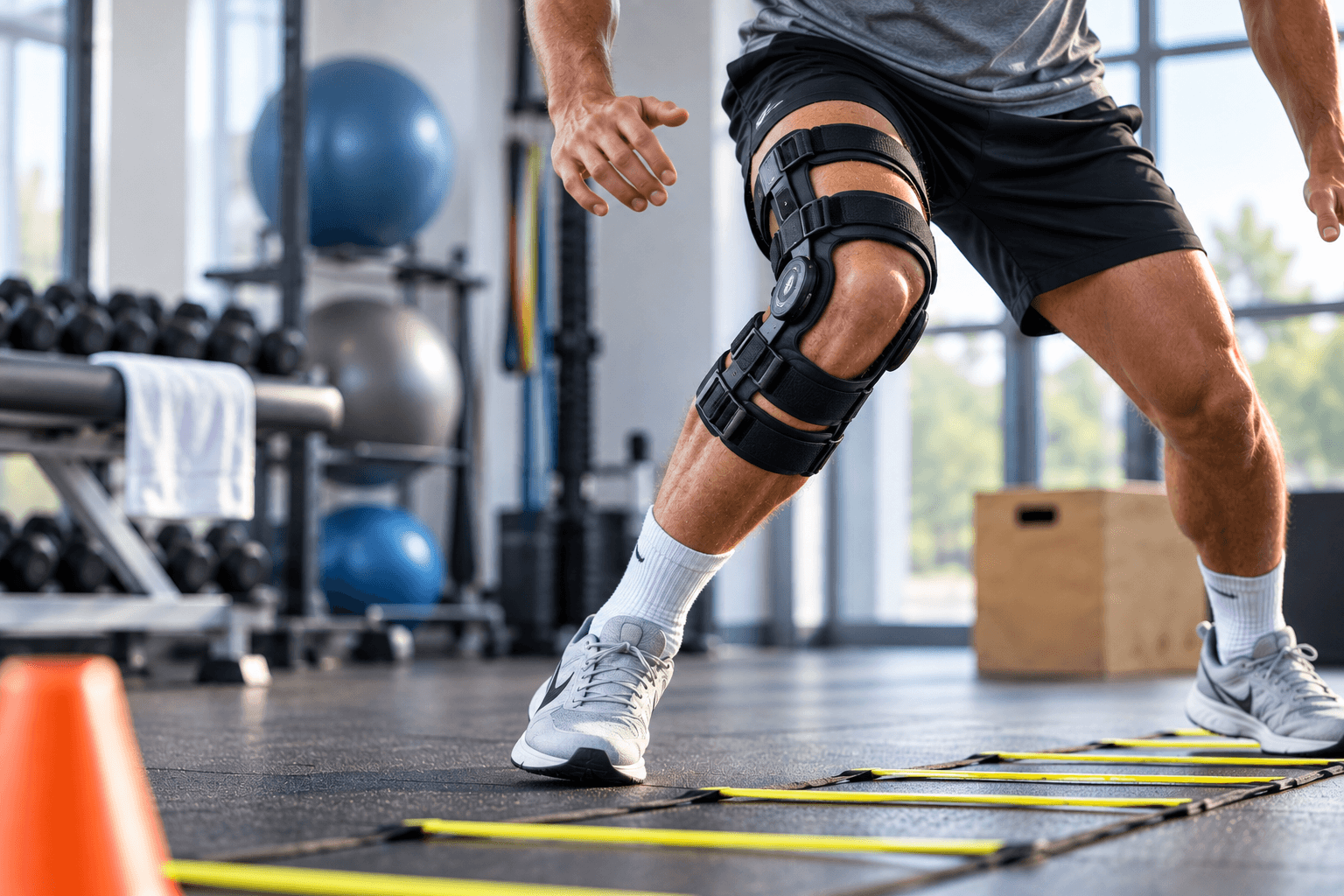
This is why medication should not be considered a complete musculoskeletal treatment by itself. Weight loss should ideally be paired with adequate nutrition, sufficient protein intake, resistance training, and continued physical activity when medically appropriate.
The goal is not simply a smaller patient. It is a lighter, stronger, and more physically capable patient.
A changing role for the orthopaedic surgeon
Orthopaedic surgeons have traditionally entered the story after a joint, tendon, bone, or ligament has already become damaged. That role may need to begin earlier.
GLP-1 medications push us to think beyond the damaged joint and consider what can be changed before surgery is needed. They bring weight, strength, nutrition, and overall health more directly into the orthopaedic conversation.
Orthopaedic surgeons should recognize obesity treatment as part of musculoskeletal care. A coordinated approach involving primary care, endocrinology, nutrition, physical therapy, and orthopaedics may become increasingly important.
The bottom line
GLP-1 medications will not replace orthopaedic surgery. Patients with fractures, severe deformity, instability, advanced joint destruction, and many other conditions will continue to benefit from operative treatment.
But these medications may change when surgery is needed, how safely it can be performed, and how we define successful treatment.
For some patients, success may still mean a well-performed joint replacement. For others, it may mean delaying that operation for several years while remaining active and independent.
Medicine often advances through better operations. Occasionally, it advances by reducing the need for them.
Clinical Pearl
Weight loss should no longer be viewed only as a way to reduce surgical risk. For patients with obesity and degenerative musculoskeletal disease, substantial weight reduction may decrease pain, improve function, delay surgery, and improve overall health. Because weight loss can also include loss of muscle, treatment should emphasize strength, nutrition, and physical activity rather than the number on the scale alone.
References
- Jastreboff AM, Aronne LJ, Ahmad NN, et al. Tirzepatide once weekly for the treatment of obesity. N Engl J Med. 2022;387(3):205-216. doi:10.1056/NEJMoa2206038
- Messier SP, Gutekunst DJ, Davis C, DeVita P. Weight loss reduces knee-joint loads in overweight and obese older adults with knee osteoarthritis. Arthritis Rheum. 2005;52(7):2026-2032. doi:10.1002/art.21139
- Hliddal H, Bays H, Czernichow S, et al. Once-weekly semaglutide in persons with obesity and knee osteoarthritis. N Engl J Med. 2024;391(17):1573-1583. doi:10.1056/NEJMoa2403664
- Boyce L, Prasad A, Barrett M, et al. The outcomes of total knee arthroplasty in morbidly obese patients: a systematic review of the literature. Arch Orthop Trauma Surg. 2019;139(4):553-560. doi:10.1007/s00402-019-03127-5
- Look M, Dunn JP, Kushner RF, et al. Body composition changes during weight reduction with tirzepatide in the SURMOUNT-1 study of adults with obesity or overweight. Diabetes Obes Metab. 2025;27(5):2720-2729. doi:10.1111/dom.16275
Brian M. Katt, MD
Faculty, Rutgers Robert Wood Johnson Medical School