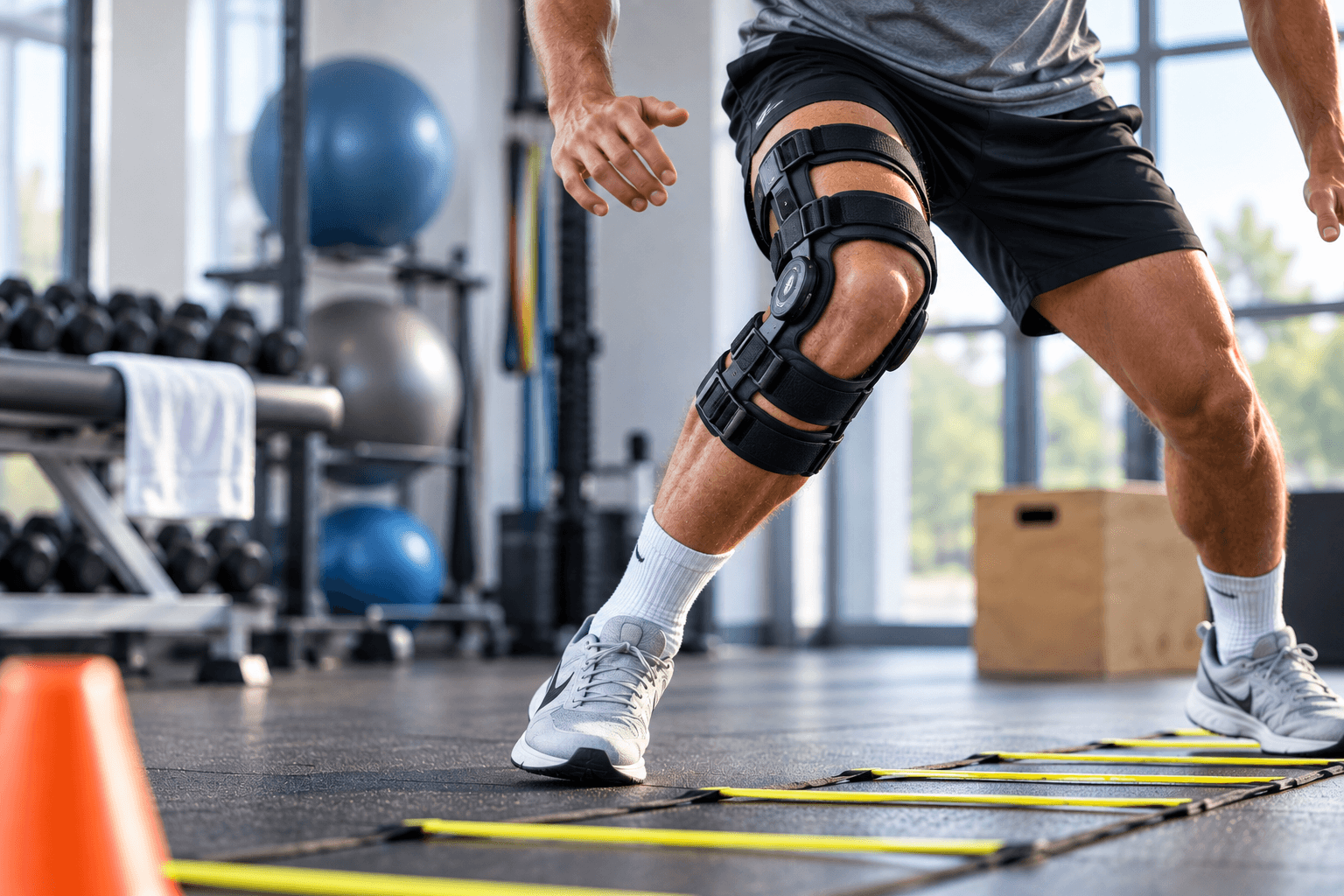
Why objective testing is replacing the 9-month rule.
For an athlete, anterior cruciate ligament reconstruction leads to one question that matters more than almost any other: When can I play again? The answer can affect a season, a scholarship, or simply the ability to return to a favorite activity. For years, much of that decision came down to the calendar. Reach nine months, pass an office examination, and clearance might follow. The current evidence suggests that recovery cannot be reduced to a date.
The anterior cruciate ligament, usually called the ACL, is one of the major stabilizing ligaments inside the knee. Reconstruction replaces the torn ligament with a tendon graft. Surgery can restore stability, but the graft still needs time to heal and adapt. The athlete must also recover strength, balance, control, and confidence.
Return to play, also called return to sport, should therefore be viewed as a progression rather than a date. Nine months remains an important checkpoint. It is not an automatic finish line.
Why Did Nine Months Become the Benchmark?
The 9-month rule is not arbitrary. In a prospective study of young athletes, those who returned to knee-strenuous sports before nine months had about seven times the rate of a second ACL injury compared with those who waited longer.
That finding made time an important safety marker, particularly for adolescents and young adults returning to sports that involve cutting, pivoting, or rapid changes in direction. It did not prove that every athlete becomes safe on the first day of the tenth month, or that every sport places the same demand on the knee.
Newer evidence reinforces that distinction. A 2025 study of 530 male athletes in pivoting sports found that athletes who completed rehabilitation and met objective discharge criteria were much more likely to return to their previous sport. Among those who met the criteria, returning before or after nine months was not associated with a different rate of new knee or ACL injury.
The practical conclusion is not that time no longer matters. It is that time alone does not describe recovery.
What Does Objective Testing Measure?
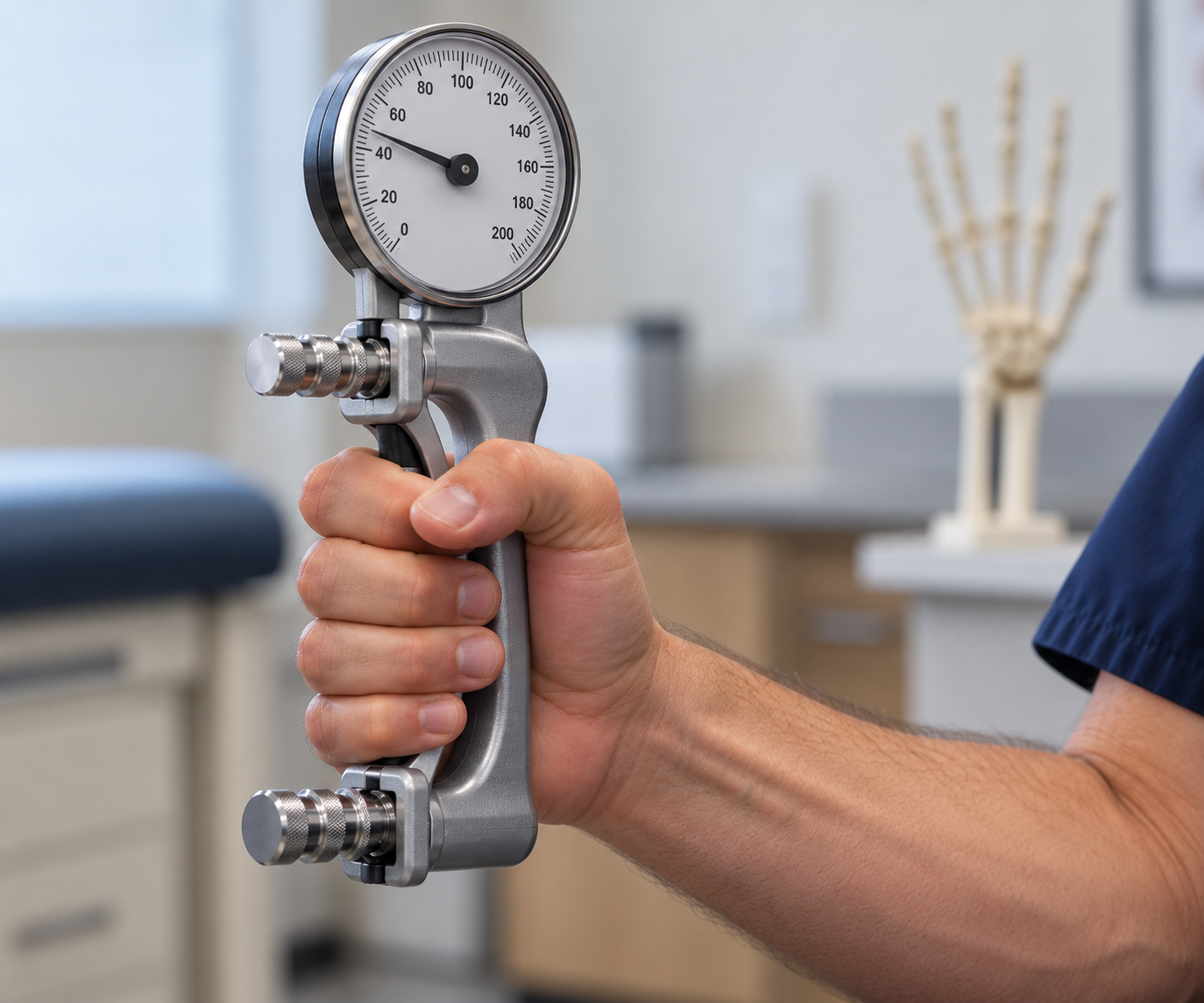
A return-to-sport evaluation looks at more than whether the knee is stable. It usually measures leg strength, single-leg hopping, balance, and control. It also examines how the athlete lands, turns, and performs movements that resemble the sport. Confidence and fear of another injury are part of the evaluation as well.
One commonly reported result is the limb symmetry index. This compares the operated leg with the other leg. A score of 90% means the reconstructed side performed at 90% of the opposite side, and 90% is often used as a minimum target.
That number is helpful, but it has limits. The uninjured leg may also lose strength during rehabilitation, making the comparison look better than it should. An athlete may hop the same distance on both legs while landing with poor control or allowing the knee to collapse inward. Distance and strength do not capture the entire movement.
An international group of ACL experts now recommends moving away from clearance based only on time. Their framework treats recovery as a series of steps: returning to practice, returning to competition, and eventually returning to the athlete’s previous level of performance. The decision should include the examination, physical testing, confidence, healing, and the demands of the sport.
The Mental Side Is Part of Recovery
An athlete can regain strength and still hesitate to cut, jump, or absorb contact. Fear of another injury can change movement and limit performance. Confidence alone does not make the knee safe, but ignoring confidence leaves out an important part of readiness.
The ACL Return to Sport after Injury scale, usually shortened to ACL-RSI, is a questionnaire that measures confidence, emotions, and perceived risk. In a prospective study, a low score helped identify athletes who were less likely to return to their previous sport, while the physical tests in that study did not predict return as well.
This does not mean a questionnaire should replace strength or movement testing. It means physical and psychological recovery should be considered together.
Passing a Test Does Not Eliminate Risk
Return-to-sport testing is useful, but it is not a crystal ball. A 2024 review of nine studies involving 1,410 patients found that passing a testing battery was associated with about half the risk of tearing the reconstructed graft. It was not associated with a lower overall rate of a second ACL injury or an injury to the opposite knee.
That is an important distinction. Testing can reveal deficits, guide rehabilitation, and reduce some risk. Current testing cannot reliably identify every athlete who will be injured again.
A Better Question Than ‘Has It Been Nine Months?’
The return decision should match the athlete and the sport. A sprinter, a golfer, and a lacrosse player place very different demands on the knee. Age, graft type, associated injuries, rehabilitation progress, movement quality, confidence, position, and level of competition may all change the discussion.
A useful conversation asks whether enough time has passed for healing, whether the athlete has recovered strength and control, and whether the athlete can tolerate the actual demands of the sport without pain, swelling, hesitation, or altered movement.
There is no single validated test that guarantees a safe return. The best available approach combines an appropriate timeline with objective testing, sport-specific progression, psychological readiness, and an honest discussion of the remaining risk. The calendar still matters. It should no longer make the decision by itself.
References
- Beischer S, Gustavsson L, Hamrin Senorski E, et al. Young athletes who return to sport before 9 months after anterior cruciate ligament reconstruction have a rate of new injury 7 times that of those who delay return. J Orthop Sports Phys Ther. 2020;50(2):83-90. doi:10.2519/jospt.2020.9071
- Kotsifaki R, King E, Bahr R, Whiteley R. Is 9 months the sweet spot for male athletes to return to sport after anterior cruciate ligament reconstruction? Br J Sports Med. 2025;59(9):667-675. doi:10.1136/bjsports-2024-108733
- Meredith SJ, Rauer T, Chmielewski TL, et al. Return to sport after anterior cruciate ligament injury: Panther Symposium ACL Injury Return to Sport Consensus Group. Orthop J Sports Med. 2020;8(6):2325967120930829. doi:10.1177/2325967120930829
- Faleide AGH, Magnussen LH, Strand T, et al. The role of psychological readiness in return to sport assessment after anterior cruciate ligament reconstruction. Am J Sports Med. 2021;49(5):1236-1243. doi:10.1177/0363546521991924
- Zhou W, Liu X, Hong Q, Wang J, Luo X. Association between passing return-to-sport testing and re-injury risk in patients after anterior cruciate ligament reconstruction surgery: a systematic review and meta-analysis. PeerJ. 2024;12:e17279. doi:10.7717/peerj.17279
About the Author
Peter Filtes, MD, PharmD, is a PGY-3 orthopaedic surgery resident in the Rutgers Health/Robert Wood Johnson Medical School Program. He graduated from the Ernest Mario School of Pharmacy at Rutgers University in 2020 and Rutgers Robert Wood Johnson Medical School in 2024.