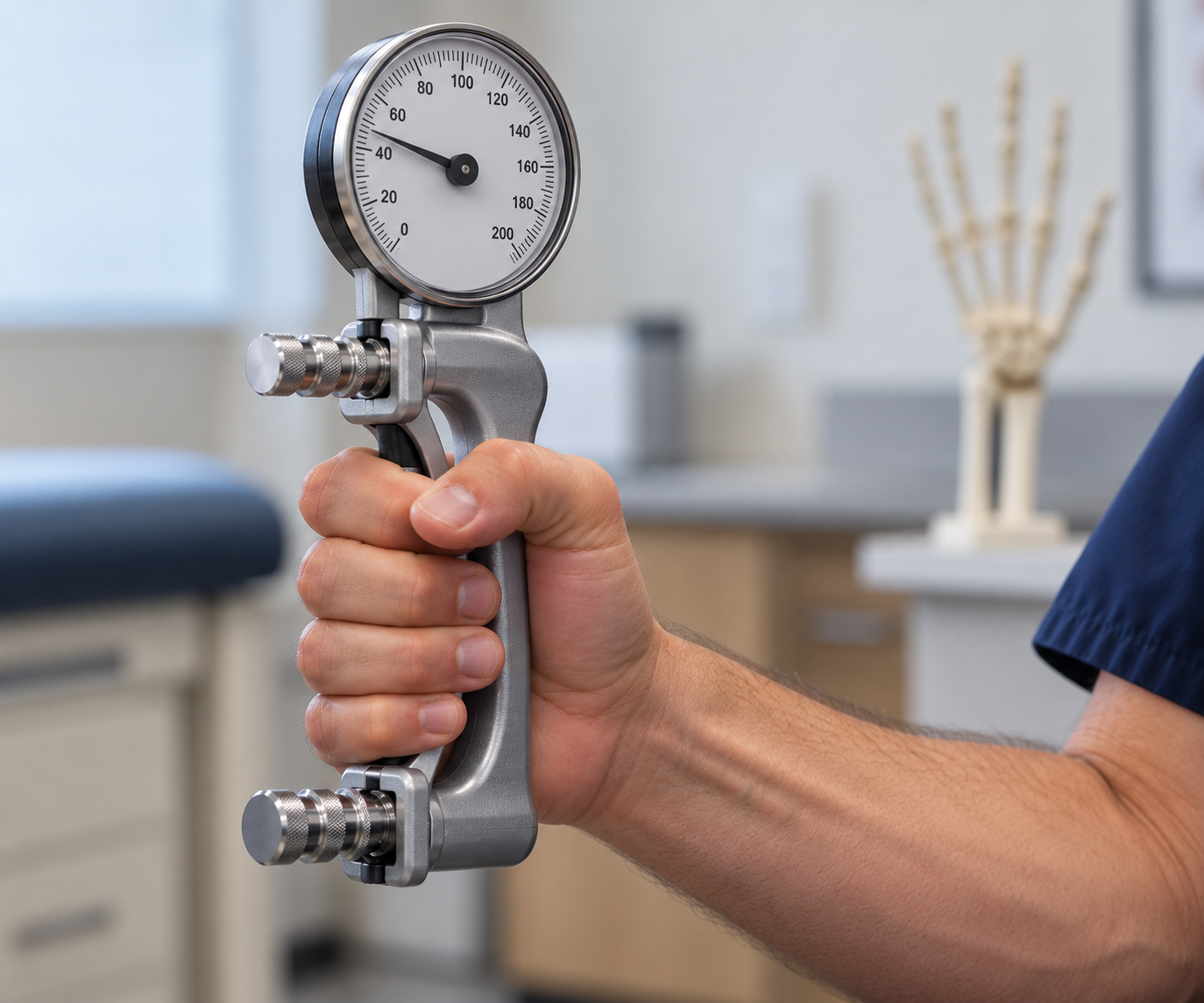
New research suggests one of the simplest measurements in medicine may reveal something about the health of the entire person.
What if one measure of healthy aging takes about 30 seconds and fits in your hand?
In 2026, two large studies added to growing interest in grip strength. A meta-analysis involving more than 380,000 people found that greater grip strength was associated with a lower risk of future cognitive decline. Another international study found that people who maintained greater grip strength over time were more likely to experience what researchers called “successful aging.”
That does not mean squeezing harder prevents dementia or makes us live longer. Grip strength may instead be a simple marker of something broader: how well multiple systems in the body are functioning together.
I have seen the importance of hand function much closer to home. My mother has always enjoyed cooking and gardening. Recently, persistent thumb pain has made both more difficult. She modifies how she grips things and sometimes avoids activities altogether while deciding whether to pursue surgery.
In her case, there is an obvious local explanation. But what about an older patient whose grip gradually weakens without arthritis, injury, or another clear cause?
Grip strength depends on more than the muscles of the hand. It requires muscle mass, intact nerves, coordination, nutrition, physical activity, and overall physiologic reserve. That may explain why weaker grip has repeatedly been associated with outcomes that seem far removed from the hand.
In the landmark Prospective Urban Rural Epidemiology (PURE) study of nearly 140,000 adults, every 5-kilogram decrease in grip strength was associated with a 16 percent higher risk of death from any cause and a 17 percent higher risk of cardiovascular death. Other studies have linked weaker grip with dementia, poorer cognitive performance, and changes seen on brain imaging. The new 2026 studies strengthen the idea that grip strength may be one accessible marker of how well we are aging.
The important word is association. A weak grip is not a dementia test. Arthritis, pain, nerve compression, previous injury, and many other conditions can reduce hand strength.
That may actually be where orthopaedics enters the story.
When an older patient says, “My hand isn’t as strong as it used to be,” we should look for a local explanation. But perhaps there is value in asking one additional question: Has something else changed too?
Sometimes the hand tells us about the hand. Other times, it may be one clue that something broader is changing.
Clinical Pearl
Grip strength is simple to measure but nonspecific. Unexplained or generalized decline may warrant looking beyond the hand at muscle strength, neurologic function, frailty, and cognition.
Why It Matters
Cooking, gardening, buttoning a shirt, and opening a medication bottle may seem like small tasks. Together, they represent independence. The hand may provide a surprisingly accessible window into how well a person is aging.
References
- Cruz-Jentoft AJ, Bahat G, Bauer J, et al. Sarcopenia: revised European consensus on definition and diagnosis. Age Ageing. 2019;48(1):16-31. doi:10.1093/ageing/afy169
- Leong DP, Teo KK, Rangarajan S, et al. Prognostic value of grip strength: findings from the Prospective Urban Rural Epidemiology (PURE) study. Lancet. 2015;386(9990):266-273. doi:10.1016/S0140-6736(14)62000-6
- Duchowny KA, Ackley SF, Brenowitz WD, et al. Associations between handgrip strength and dementia risk, cognition, and neuroimaging outcomes in the UK Biobank cohort study. JAMA Netw Open. 2022;5(6):e2218314. doi:10.1001/jamanetworkopen.2022.18314
- McGrath R, Vincent BM, Hackney KJ, et al. The longitudinal associations of handgrip strength and cognitive function in aging Americans. J Am Med Dir Assoc. 2020;21(5):634-639.e1. doi:10.1016/j.jamda.2019.08.032
- Curreri C, Trevisan C, Carrer P, et al. Difficulties with fine motor skills and cognitive impairment in an elderly population: the Progetto Veneto Anziani. J Am Geriatr Soc. 2018;66(2):350-356. doi:10.1111/jgs.15209
About the Author
Nicolina Zappley is a third-year medical student at Rutgers Robert Wood Johnson Medical School. She graduated from Rutgers University in 2022.