New additive manufacturing technologies aim to move orthopaedic care beyond standardized off-the-shelf implants and rigid plaster casts.
What is Happening?
For decades, structural reconstruction and fracture care in orthopaedics have followed a familiar, standardized script, with surgeons managing complex bone loss or severe deformities relying on off-the-shelf metal implants, off-contour plates, and standard intramedullary nails. For non-operative fractures, patients are placed into circumferential plaster or fiberglass casts. When a cast breaks, gets wet, or causes severe skin irritation, it is simply cut off and replaced.
These traditional methods can be remarkably effective, but they share a core limitation: they force a highly variable human anatomy into uniform, generic hardware. Off-the-shelf total joint implants and off-the-rack plates require bone to be cut, reamed, or filled to match the metal, rather than the metal matching the patient. Conventional casting relies on rigid, non-breathable cylinders that do not accommodate post-injury swelling, which frequently leads to soft-tissue breakdown, pressure sores, and unplanned clinic visits.
Recent clinical literature highlights an ambitious, cross-disciplinary movement to change that paradigm. By leveraging non-invasive optical surface scanning, computer-aided design (CAD) software, and additive manufacturing (3D printing), orthopaedic specialists are shifting toward completely personalized, patient-specific care. This transformation spans two primary domains: custom 3D-printed orthoses for acute trauma and personalized, porous titanium implants for complex reconstructive surgery.
Why does it matter to orthopaedics?
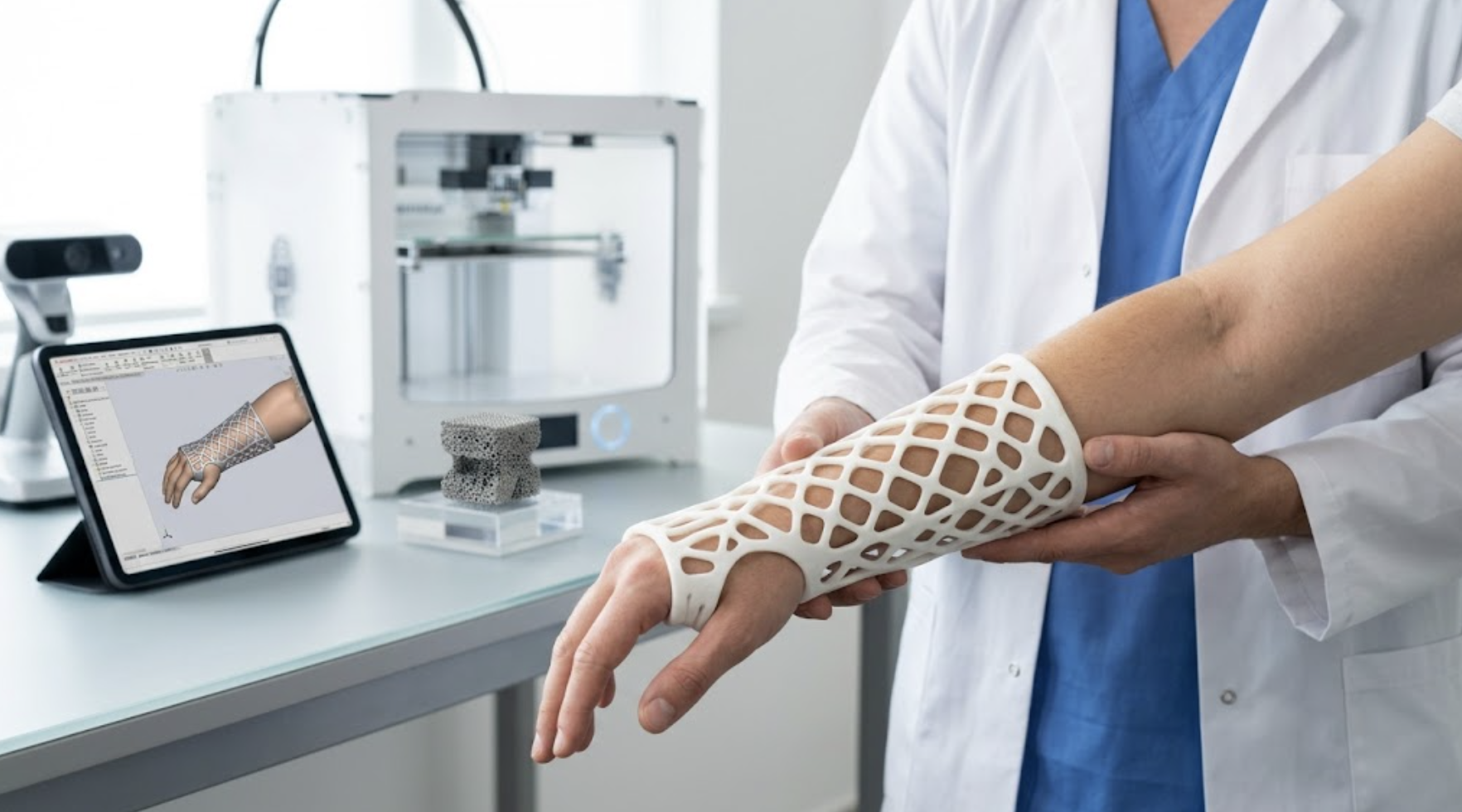
Using biocompatible thermoplastics such as polylactic acid (PLA), a lightweight, open-lattice orthosis is manufactured to match the patient’s precise anatomy. These ventilated, skeletonized casts eliminate surface friction, prevent tissue maceration, and allow direct open-air breathability over healing bone.
Recent randomized clinical trials comparing 3D-printed casts to conventional fiberglass in pediatric wrist fractures demonstrate that 3D orthoses achieve equivalent rates of radiographic bone union and alignment, with over 90% healing in excellent anatomical positions. Crucially, patients in 3D devices reported statistically significant improvements in comfort, skin preservation, ease of care, and overall treatment satisfaction. Because materials like PLA are completely radiolucent, surgeons can clearly evaluate fracture healing on standard X-rays without removing the device.
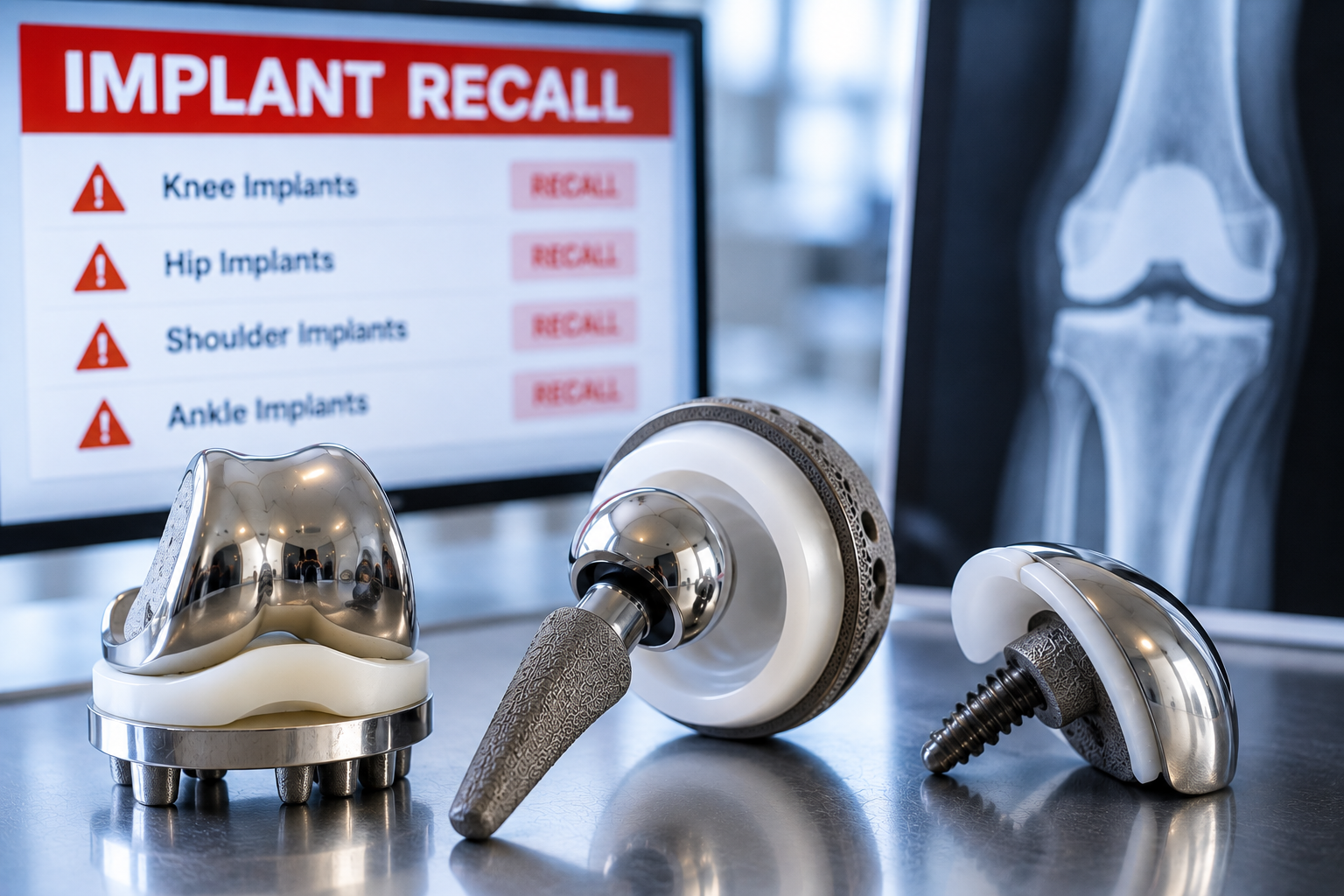
The possibilities are compelling, but the distinction between technological promise and routine clinical integration remains important. In complex reconstructive surgery, additive manufacturing allows titanium powder to be fused layer-by-layer into porous, custom-matched scaffolds. These custom implants incorporate microscopic architectures that closely mimic natural trabecular bone, encouraging rapid osseointegration in cases of massive bone loss, revision total joint arthroplasty, or oncologic resections.
Point-of-care 3D printing is not yet an instantaneous solution. Optical scanning requires careful timing, as acute post-injury swelling can compromise the fit of a custom cast. Fabrication times for desktop-printed orthoses still range from several hours to overnight, requiring temporary splinting during the initial inflammatory phase. On the implant side, high-tier metal additive manufacturing involves significant capital investment, stringent regulatory oversight, and complex design workflows that require close coordination between bioengineers and surgeons.
Why should the reader care?
For patients, surgeons, and healthcare systems, 3D printing transitions orthopaedics from a “one-size-fits-all” model to true personalized medicine. Systematic reviews of clinical 3D printing applications indicate that surgical planning and custom implants account for the majority of adoption, but patient-centered orthotics are rapidly expanding. Clinical comparative trials demonstrate that patients wearing 3D-printed casts report statistically significant improvements in comfort, skin preservation, overall ease of care, and treatment satisfaction, describing the daily burden as “no hassle” compared with traditional plaster casts.
Furthermore, as optical surface scanners, open-source CAD tools, and desktop printers become increasingly accessible, point-of-care manufacturing will streamline hospital workflows, shorten operating room times, eliminate cast-saw anxiety, and improve long-term outcomes. While 3D-printed casts currently carry higher upfront costs than traditional options, increased clinical adoption and manufacturing accessibility should eventually allow for personalized, precise treatment without a prohibitive financial burden.
Clinical Pearl:
3D printing offers unmatched custom fit, breathability, and surgical precision, but its success depends entirely on lead time and static soft-tissue geometry. Fabrication delays and post-injury swelling mean it cannot replace immediate acute stabilization.
Why it matters:
Orthopedics has long excelled at fitting human anatomy into standardized metal implants and rigid plaster cylinders. As point-of-care 3D scanning, CAD software, and additive manufacturing become more accessible, orthopaedic care can shift from generic, off-the-shelf devices toward highly personalized, patient-specific reconstruction and trauma care.
References:
- Luo Y. Toward Fully Automated Personalized Orthopedic Treatments: Innovations and Interdisciplinary Gaps. Bioengineering. 2024;11(8):817. doi.org/10.3390/bioengineering11080817
- Tueni N, Amirouche F. Branding a New Technological Outlook for Future Orthopaedics. Bioengineering. 2025;12(5):494. doi.org/10.3390/bioengineering12050494
- Fong FJY, Onggo JD, Munro YL, Yam MGJ. Applications of 3D printing in orthopedics: a scoping review. Eur J Orthop Surg Traumatol Orthop Traumatol. 2025;35(1):367. doi.org/10.1007/s00590-025-04429-8
- Wixted CM, Peterson JR, Kadakia RJ, Adams SB. Three-dimensional Printing in Orthopaedic Surgery: Current Applications and Future Developments. JAAOS Glob Res Rev. 2021;5(4):e20.00230-11. doi.org/10.5435/JAAOSGlobal-D-20-00230
- Katt B, Imbergamo C, Seigerman D, Rivlin M, Beredjiklian PK. The Use of 3D Printed Customized Casts in Children with Upper Extremity Fractures: A Report of Two Cases. Arch Bone Jt Surg. 2021;9(1):126-130. doi.org/10.22038/abjs.2020.47722.2342
- Skibicki HE, Katt BM, Lutsky K, et al. Three Dimensionally Printed Versus Conventional Casts in Pediatric Wrist Fractures. Cureus. 13(10):e19090. doi.org/10.7759/cureus.19090
About the Author:
Kira Kornienko is a 1st-year medical student at Rutgers Robert Wood Johnson Medical School.