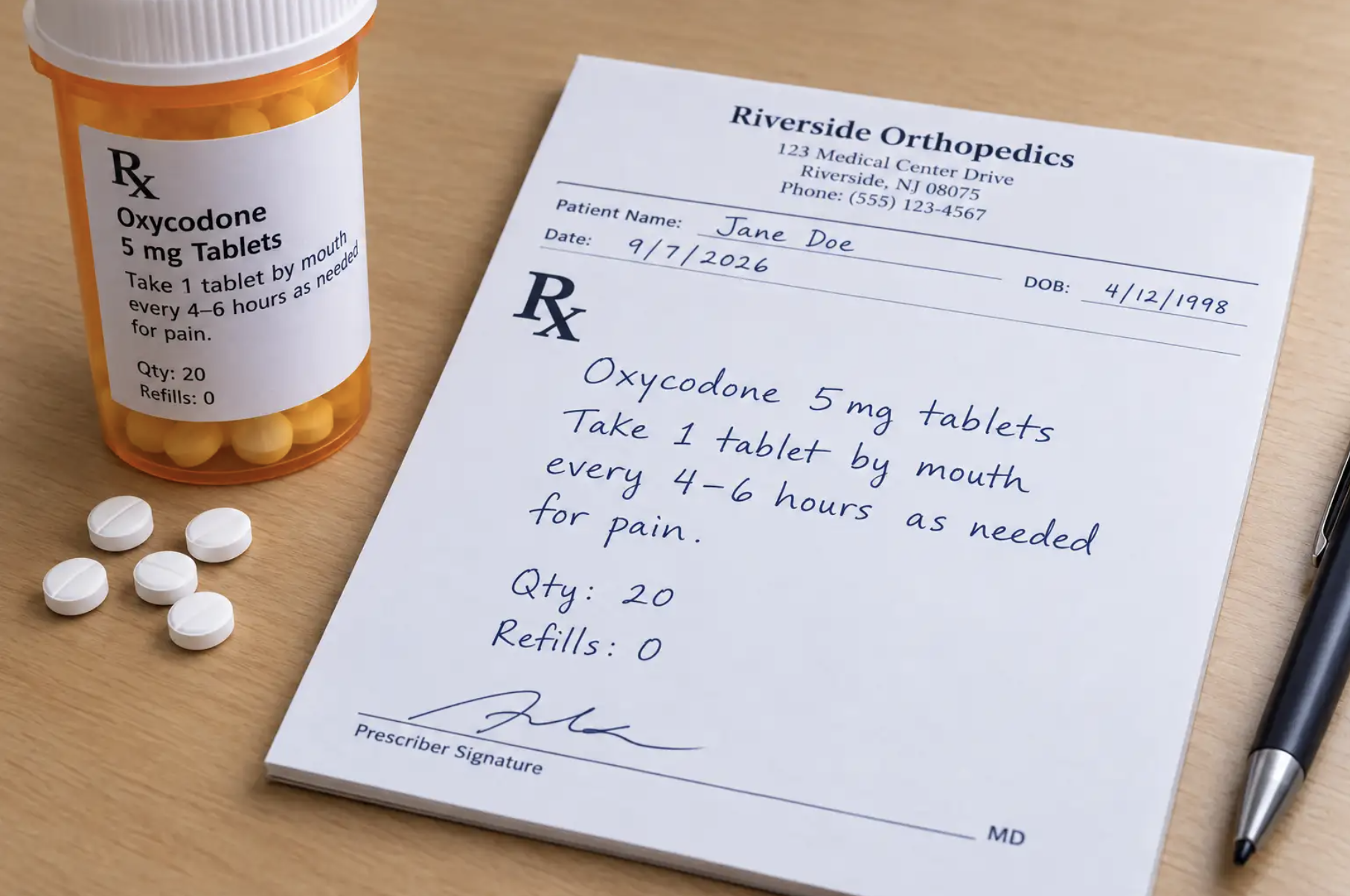
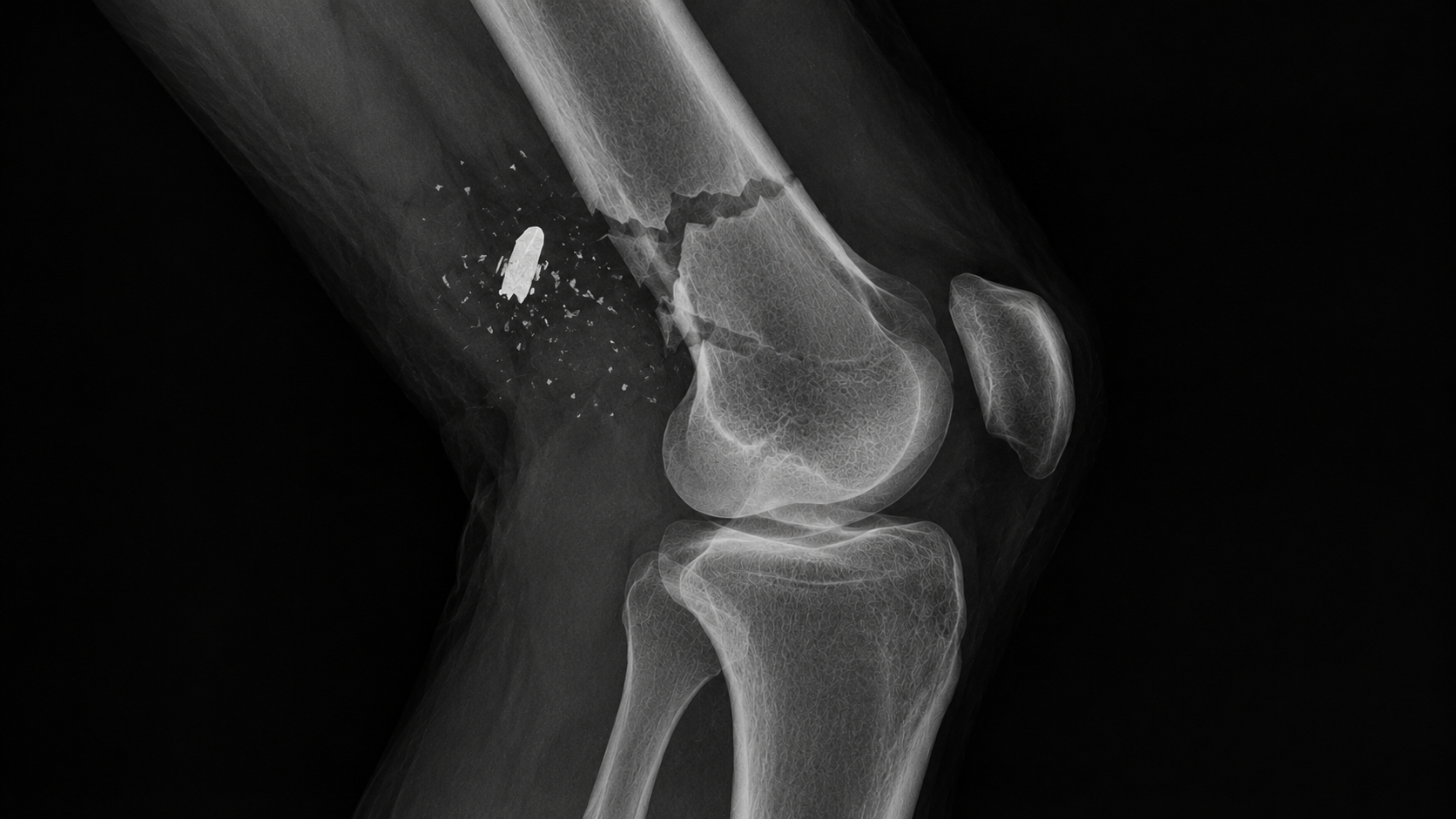
The burden of firearm injury extends beyond mortality—and increasingly reaches the orthopaedic trauma service.
Firearm injury in the United States is usually discussed in terms of deaths, but mortality captures only part of the burden. Every year, tens of thousands of people survive gunshot wounds, many with injuries to the extremities that require orthopaedic care. CDC surveillance data suggest that this burden remains substantial. A CDC analysis of participating emergency departments found that firearm-injury visits rose sharply in 2020 and, although visit rates declined from 2021 through 2023, the number of visits in 2023 remained 13.5% higher than in 2019. This does not prove that gunshot fractures themselves are steadily increasing, but it does show that firearm injury remained elevated compared with the pre-pandemic period in this surveillance sample.
Orthopaedic involvement is common because bullets frequently injure bone and soft tissue. A study using national inpatient data from 2001 to 2013 identified 334,212 firearm injuries and found that roughly half were accompanied by an orthopaedic fracture. The typical patient was a young man, and the femur was the most frequently fractured bone. These injuries are not simply “broken bones with a bullet hole.” Depending on projectile energy, location, contamination, and associated vascular or nerve injury, treatment may involve fixation, repeated debridement, soft-tissue reconstruction, vascular repair, rehabilitation, and sometimes amputation.
The consequences can extend long after hospital discharge. In a JAMA Surgery cohort of firearm-injury survivors assessed a median of nearly six years after being shot, participants reported worse physical and mental health than population norms. Nearly half screened positive for probable post-traumatic stress disorder, and employment declined after injury. Although that study included gunshot wounds beyond fractures alone, it highlights an important point for orthopaedics: successful fracture union does not necessarily mean full recovery. Chronic pain, weakness, impaired mobility, nerve injury, psychological trauma, and difficulty returning to work can persist for years.
There is also a major economic burden. A 2025 JAMA Health Forum analysis estimated that initial firearm-related emergency and inpatient care generated $7.7 billion in health care costs from 2016 through 2021, expressed in 2024 US dollars. Firearm injuries isolated to the extremities—not necessarily involving fractures—alone accounted for approximately $1.4 billion. Importantly, those estimates did not include many downstream expenses such as professional fees, rehabilitation, physical therapy, readmissions, long-term nursing care, or costs borne by families and communities. For a young patient with a ballistic femur or tibia fracture, the true cost may continue accumulating long after the initial operation.
So are gunshot fractures becoming a public health crisis? The most defensible answer is that they are part of an established firearm-injury public health crisis, while the trend in fractures specifically is less certain. The CDC’s data through 2023 show a pandemic-era surge in firearm-injury emergency visits followed by improvement, but not a return to pre-pandemic levels among participating emergency departments. Meanwhile, orthopaedic fractures represent a large share of hospitalized firearm-injury cases and can create prolonged disability, repeated health care use, and substantial cost.
That distinction matters. Orthopaedic surgeons often meet survivors after the immediate threat to life has passed. Their role therefore extends beyond fixation: identifying neurovascular injury, preventing infection, restoring function, coordinating rehabilitation, and recognizing the social and psychological consequences that influence recovery. It also places orthopaedic trauma teams in a position to contribute to firearm-injury surveillance, multidisciplinary research, and hospital-based violence-intervention programs. If public health is concerned not only with who dies, but also with who survives and what happens afterward, gunshot fractures deserve far more attention.
Clinical Pearl:
A gunshot-related fracture should be viewed as more than an isolated skeletal injury. Associated vascular, neurologic, soft-tissue, infectious, functional, and psychosocial complications can determine long-term outcome.
Why It Matters:
Firearm mortality is only the visible edge of the problem. Orthopaedic surgeons care for many of the survivors, and the lasting burden of extremity injury—operations, rehabilitation, disability, and cost—makes ballistic fractures an important part of the broader firearm-injury public health crisis.
References:
- Holland KM, Chen Y, Zwald ML, et al. Notes from the Field: Trends in Emergency Department Visits for Firearm Injuries—United States, January 2018–December 2023. MMWR Morb Mortal Wkly Rep. 2024;73(46):1064–1066. doi:10.15585/mmwr.mm7346a4
- Congiusta DV, Oettinger JP, Merchant AM, Vosbikian MM, Ahmed IH. Epidemiology of orthopaedic fractures due to firearms. J Clin Orthop Trauma. 2021;12(1):45–49. doi:10.1016/j.jcot.2020.10.047
- Vella MA, Warshauer A, Tortorello G, et al. Long-term Functional, Psychological, Emotional, and Social Outcomes in Survivors of Firearm Injuries. JAMA Surg. 2020;155(1):51–59. doi:10.1001/jamasurg.2019.4533
- Royan R, Lundberg A, Shan Y, Thomas AC, Stey AM. Health Care Costs of Firearm Injury Hospital Visits in the US. JAMA Health Forum. 2025;6(9):e253299. doi:10.1001/jamahealthforum.2025.3299
About the Author
Nicolina Zappley is a third-year medical student at Rutgers Robert Wood Johnson Medical School. She graduated from Rutgers University in 2022.