Evaluating the costs and benefits of year-round sports training in pediatric and adolescent athletes.
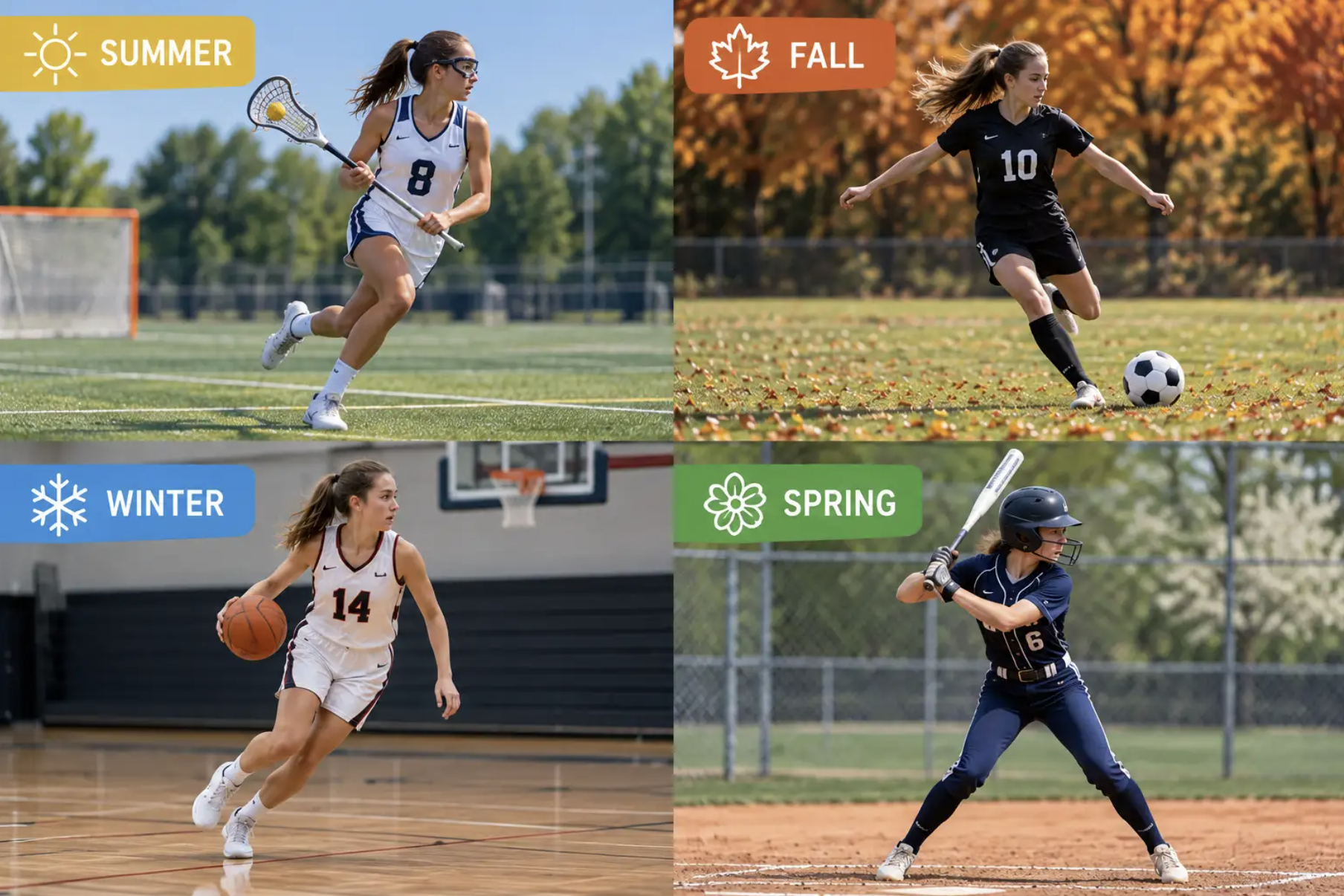
Trends in youth sports participation have shifted dramatically over the past several decades. With the emergence of club teams and travel leagues, the traditional sport “season” has extended into an almost year-round activity. These extended seasons leave fewer off-season months for young athletes to rest, recover, and prepare for the next one. While the increase in playing opportunities may provide a competitive edge and improve skills, it also exposes athletes to a higher risk of overuse injuries as a 2026 meta-analysis found a positive association sport specialization and injury risk among youth athletes.
Why Young Athletes are Vulnerable to Overuse Injuries
Athletes who specialize in a year-round sport may be at further risk for overuse injuries due to the repetitive movements on the same muscles, ligaments, and tendons without adequate time to recover and repair microtears in the anatomy. Particularly the growth plate in young athletes may be at higher risk for injury and adds an additional weak spot adults athletes lack. Multisport training may confer protective factors through broad biomechanical development leading to an overall well-balanced musculoskeletal system, whereas sport specialization emphasizes development in the predominant muscle groups needed in the sport, potentially causing muscular imbalances.
Common Injury Patterns Associated with Year-Round Play
Orthopaedic surgeons have noted trends in overuse injuries especially in single sport youth athletes such as spondylosis in swimmers or Little League elbow (apophysitis) in baseball players. Certain sports also carry increased risk of growth plate injuries. Sports with repetitive throwing or overhead motions such as baseball, softball, tennis, volleyball, and football are associated with increased growth plate stress.
Implications Beyond Physical Health
The impact of year-round sports participation is not limited to the physical domain. Research found that intensive year-round single-sport participation is associated with elevated levels of stress and anxiety, contributing to early burnout in athletes. Overtraining syndrome can also be precipitated by year-round single-sport participation and can impact not only the physical health of the athlete, but also mental health, including increased depression, decreased motivation, and poor sleep.
Role of Rest and Recovery
Rest does not only mean refraining from training but can also be a form of active recovery with decreased training volume and intensity. This period of lighter training allows the tissue and mind to rest, allowing for healing and preparation for the next season. Relative rest allows athletes to maintain cardiovascular fitness through modified training that does not stress the injured area.
Clinical Pearl:
Orthopedic health care providers can play a significant role in advocating for rest and diverse training for their young athlete patients. Providers can emphasize the importance of a comprehensive recovery program that focuses not only on resting the injured area but also on strengthening the athletes’ core and surrounding muscles and stretching the supporting structures.
Why it matters:
The rate of youth participating in year-round sports is unlikely to change; however, reframing recovery time and diverse sport training as tools to improve the long-term health of an athlete may be an effective strategy to help prevent further increases in overuse injuries in young athletes.
References:
- The Double-Edged Sword: A Guide to Early Sport Specialization. Accessed September 16, 2026.
- Overuse Injury Risk Increases With Year-Round Sport Participation In Middle School Aged Athletes. 10.1177/2325967119S00058
- Lai G, Fang BB, Wang W, Lu FJH, Shen WJ. Association between youth athletes’ sports specialization and injuries: a systematic review and meta-analysis. PeerJ. 2026 Sep 7;14:e21680. doi: 10.7717/peerj.21680.
- Brenner JS. Sports Specialization and Intensive Training in Young Athletes. Pediatrics. 2016;138(3). doi:10.1542/peds.2016-2148
- Rugg C, Kadoor A, Feeley BT, Pandya NK. The Effects of Playing Multiple High School Sports on National Basketball Association Players’ Propensity for Injury and Athletic Performance. The American Journal of Sports Medicine. 2017;46(2):402-408. doi:10.1177/0363546517738736
- Wilczyńska D, Qi W, Jaenes JC, Alarcón D, Arenilla MJ, Lipowski M. Burnout and Mental Interventions among Youth Athletes: A Systematic Review and Meta-Analysis of the Studies. International Journal of Environmental Research and Public Health. 2022;19(17):10662. doi:10.3390/ijerph191710662
About the Author:
Dana Woodruff is a 2nd year medical student at Rutgers Robert Wood Johnson Medical School.